
Christmas Breakfast Casserole
Christmas morning is one of the most exciting times of the year, but preparing a big holiday breakfast can sometimes feel overwhelming. Between opening presents, spending time with family, and enjoying a cozy morning at home, nobody wants to spend hours standing in the kitchen. That’s where this Christmas Breakfast Casserole comes in.
This easy breakfast casserole combines savory breakfast sausage, fluffy eggs, soft bread, and melted cheese in one delicious baked dish. The ingredients come together in a hearty, comforting meal that’s perfect for feeding family members and holiday guests.
One of the best things about this recipe is that you can assemble it the night before Christmas. Simply cover the casserole, refrigerate it, and bake it the next morning. That means less preparation on Christmas Day and more time to enjoy the holiday with the people you love.
Whether you’re hosting a large family breakfast, preparing a festive brunch, or looking for a simple holiday breakfast tradition, this Christmas breakfast casserole is an excellent choice. Serve it with fresh fruit, cinnamon rolls, or a warm cup of coffee for a complete holiday meal.
Recipe Overview
| Recipe Detail | Information |
|---|---|
| Prep Time | 20 minutes |
| Cook Time | 45–55 minutes |
| Total Time | Approximately 1 hour 15 minutes |
| Chilling Time | 4 hours or overnight, optional |
| Servings | 8 |
| Course | Breakfast, Brunch |
| Cuisine | American |
| Difficulty | Easy |
| Cooking Method | Baking |
| Main Ingredients | Eggs, sausage, bread, cheese, milk |
| Best For | Christmas morning, holiday brunch, family gatherings |
Why You’ll Love This Christmas Breakfast Casserole
1. Perfect for Christmas Morning
This casserole is hearty, warm, and satisfying. Instead of cooking several separate breakfast dishes, you can prepare one main dish that everyone can share.
2. Make It Ahead of Time
You can assemble the casserole on Christmas Eve and refrigerate it overnight. In the morning, simply bake it until the eggs are set and the top is golden. This makes holiday cooking much easier.
3. Simple, Everyday Ingredients
You don’t need expensive or unusual ingredients. Bread, eggs, milk, breakfast sausage, and cheese are easy to find at most American grocery stores.
4. Easy to Customize
You can add vegetables, switch the cheese, use turkey sausage, or leave out the meat for a vegetarian variation. It’s easy to adjust the recipe to suit your family’s preferences.
5. Great for Feeding a Crowd
This recipe makes eight servings and can be doubled for a larger gathering if you have suitable baking dishes and enough oven space.
Ingredients You’ll Need
The following ingredients make one 9-by-13-inch casserole.
| Ingredient | Quantity | Purpose |
|---|---|---|
| Breakfast sausage | 1 pound | Adds savory flavor and protein |
| White or French bread | 8 cups, cubed | Creates a hearty base |
| Large eggs | 10 | Hold the casserole together |
| Whole milk | 2 cups | Helps create a tender egg mixture |
| Shredded cheddar cheese | 2 cups | Adds a rich, cheesy flavor |
| Yellow onion | 1 small, diced | Adds sweetness and flavor |
| Dijon mustard | 1 teaspoon | Adds a subtle tang |
| Garlic powder | ½ teaspoon | Enhances the savory flavor |
| Salt | ½ teaspoon, or to taste | Seasons the egg mixture |
| Black pepper | ¼ teaspoon | Adds mild spice |
| Butter or cooking spray | As needed | Prevents sticking |
Ingredient Tips and Substitutions
Breakfast sausage: Regular pork breakfast sausage works well because it adds plenty of savory flavor. You can use mild or spicy sausage depending on your preference. Turkey breakfast sausage is another option.
Bread: Slightly stale bread is ideal because it absorbs the egg mixture without becoming excessively soggy. French bread, sandwich bread, or sourdough can all work. If your bread is fresh, cut it into cubes and let it sit uncovered for a while to dry slightly.
Eggs: Large eggs provide structure and help the casserole set properly. Using eggs at room temperature can also help them mix more evenly with the milk.
Milk: Whole milk produces a rich, tender texture. You can substitute 2% milk, although the finished casserole may be slightly less rich.
Cheddar cheese: Sharp cheddar offers a stronger cheese flavor. Monterey Jack, Colby Jack, or a combination of cheeses also works well.
Onion: A small yellow onion adds flavor without overpowering the dish. You can replace it with green onions for a milder taste.
Dijon mustard: This ingredient adds a little depth without making the casserole taste strongly of mustard. You can omit it if you prefer.

Christmas Breakfast Casserole
Ingredients
Equipment
Method
- Preheat the oven to 350°F (175°C). Grease a 9-by-13-inch baking dish.
- Spread the bread cubes evenly across the bottom of the prepared dish.
- Cook the breakfast sausage in a skillet over medium heat for 7–10 minutes, breaking it into crumbles.
- Add the diced onion and cook for another 3–4 minutes, until softened. Drain excess grease and allow the mixture to cool slightly.
- Spread the cooked sausage and onion over the bread. Sprinkle with 1½ cups of cheddar cheese.
- Whisk the eggs, milk, Dijon mustard, garlic powder, salt, and black pepper in a large bowl.
- Pour the egg mixture evenly over the bread, sausage, and cheese. Gently press down any dry bread pieces.
- For a make-ahead casserole, cover and refrigerate for at least 4 hours or overnight. Otherwise, let it rest for 15–20 minutes before baking.
- Bake for approximately 40–50 minutes if unchilled, or about 50–60 minutes if cold from the refrigerator. Cover loosely with foil if the top browns too quickly.
- During the last 5–10 minutes, sprinkle the remaining ½ cup of cheese over the top if desired.
- Bake until the center is set and reaches 160°F (71°C).
- Rest for 5–10 minutes before slicing into eight servings. Serve warm.
Notes
- Slightly stale bread helps absorb the egg mixture and reduces the risk of a soggy casserole.
- Drain excess grease from the sausage before assembling.
- For a vegetarian version, replace the sausage with cooked vegetables or a suitable meat-free alternative.
- Turkey sausage can replace pork sausage.
- Refrigerate leftovers within 2 hours and use within 3–4 days.
- Freeze baked portions in suitable containers for best quality within about 2–3 months.
- Reheat leftovers to 165°F (74°C).
- Baking times vary by oven, dish material, and starting temperature. Check the center for doneness rather than relying on time alone.
How to Make Christmas Breakfast Casserole
Step 1: Prepare the Baking Dish and Bread
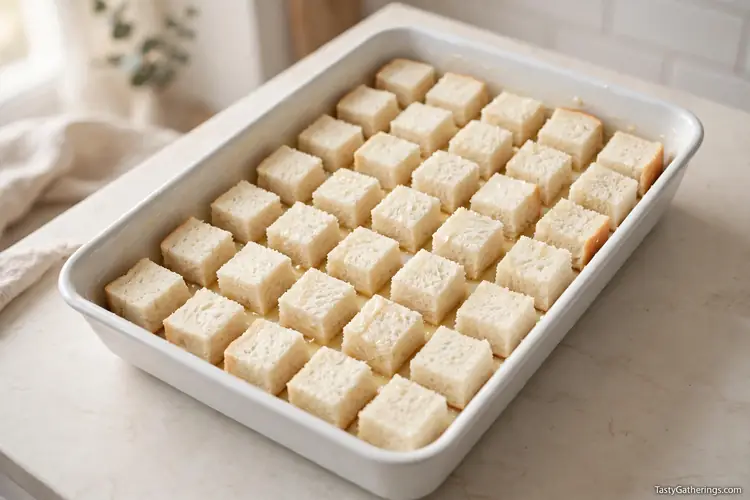
Preheat your oven to 350°F (175°C). Lightly grease a 9-by-13-inch baking dish with butter or cooking spray.
Cut the bread into approximately 1-inch cubes. Spread the bread cubes evenly across the bottom of the prepared baking dish.
If the bread is very fresh and soft, let the cubes dry out slightly before assembling the casserole. Drier bread absorbs the egg mixture more evenly and helps prevent an overly wet center.
Step 2: Cook the Breakfast Sausage
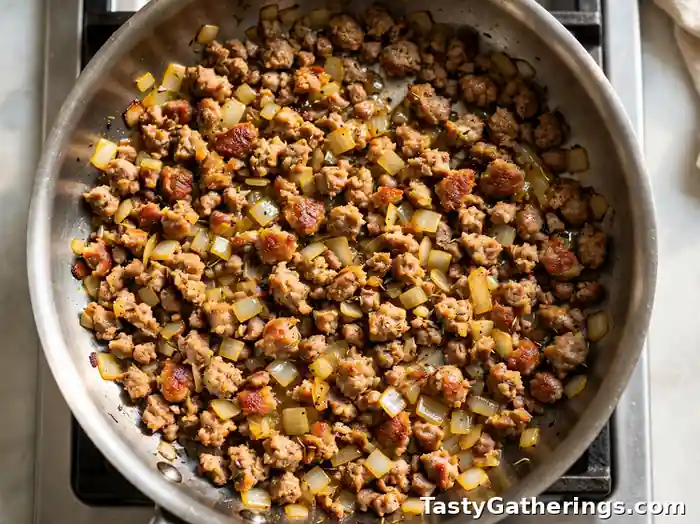
Place a large skillet over medium heat. Add the breakfast sausage and cook for approximately 7–10 minutes, breaking it into small crumbles with a wooden spoon.
Add the diced onion and cook for another 3–4 minutes, until the onion softens and the sausage is fully cooked.
Drain excess grease carefully. Allow the sausage mixture to cool slightly before adding it to the casserole.
Cooking the sausage before baking is important because it develops flavor and ensures the meat is properly cooked. Do not add raw sausage directly to the egg mixture.
Step 3: Layer the Sausage and Cheese
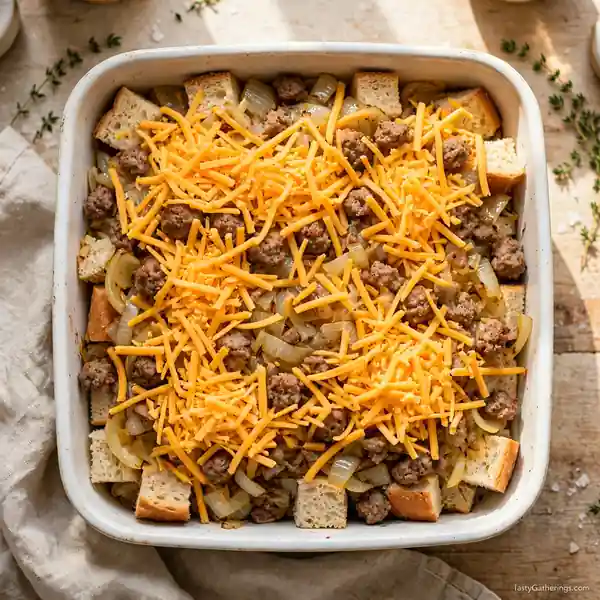
Spread the cooked sausage and onion mixture evenly over the bread cubes.
Sprinkle approximately 1½ cups of shredded cheddar cheese over the top. Reserve the remaining ½ cup for the final topping.
Try to distribute the ingredients evenly so each serving contains bread, sausage, and cheese. This also helps the casserole cook more consistently.
Step 4: Whisk the Egg Mixture
Crack the eggs into a large mixing bowl. Add the milk, Dijon mustard, garlic powder, salt, and black pepper.
Whisk everything until the egg yolks and whites are fully combined and the mixture looks uniform.
Pour the egg mixture slowly over the bread, sausage, and cheese. Make sure the liquid reaches the bread throughout the dish. Gently press down any bread pieces that remain dry on top.

Step 5: Chill the Casserole
For the best make-ahead results, cover the dish tightly and refrigerate it for at least 4 hours or overnight.
During this time, the bread absorbs the egg mixture, helping the casserole develop a more uniform texture.
If you are preparing the casserole for immediate baking, you can let it rest for about 15–20 minutes instead. The texture may be slightly different, but it can still turn out delicious.
Keep the casserole refrigerated while it rests. Do not leave the egg mixture sitting at room temperature for an extended period.
Step 6: Bake the Casserole
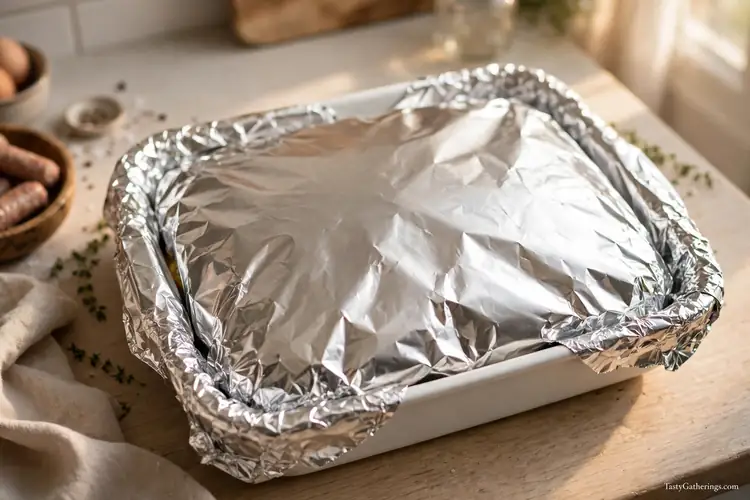
Remove the casserole from the refrigerator while the oven preheats, but avoid leaving it out for an extended period.
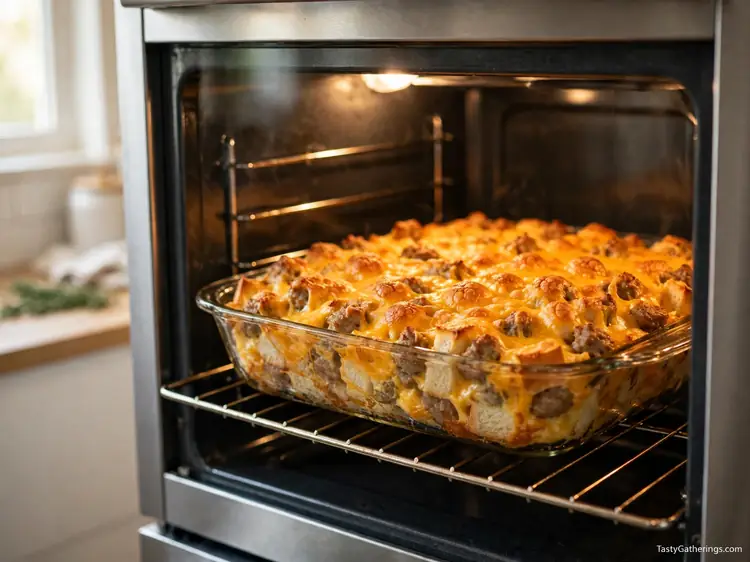
Bake at 350°F (175°C) for approximately 40–50 minutes if the dish has not been chilled overnight. A cold, overnight casserole may require about 50–60 minutes, depending on the dish and oven.
If the top begins browning too quickly, loosely cover the casserole with foil. During the final 10 minutes, remove the foil if you want a more golden top.
The casserole is ready when the center is set and the egg mixture reaches 160°F (71°C). Check the center with a food thermometer rather than relying only on the surface color.
Step 7: Add the Remaining Cheese
During the last 5–10 minutes of baking, sprinkle the reserved ½ cup of cheddar cheese over the casserole if you want a particularly cheesy topping.
Return it to the oven until the cheese melts and the center is fully cooked.
If the cheese has already browned to your liking, you can skip this extra topping step.
Step 8: Rest, Slice, and Serve
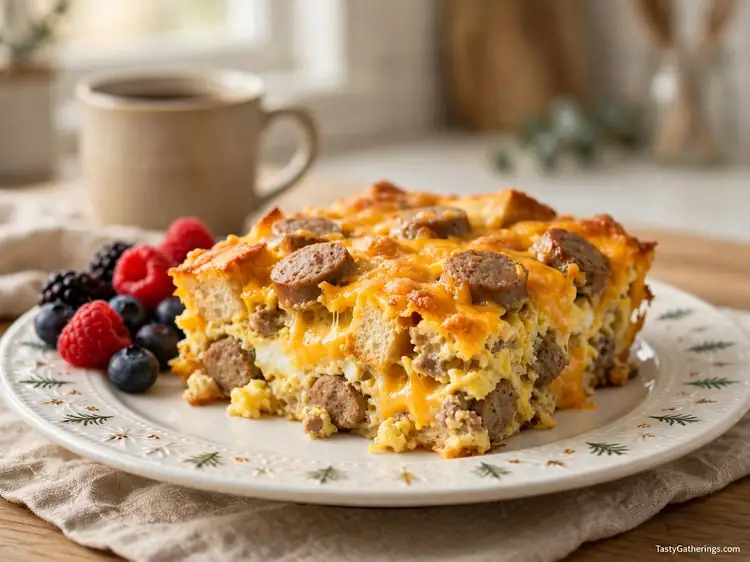
Remove the casserole from the oven and let it rest for about 5–10 minutes before cutting.
Resting allows the casserole to settle, making it easier to cut into neat portions. Slice it into eight servings and transfer the pieces to plates with a spatula.
Serve warm with fresh fruit, pastries, roasted potatoes, or your favorite Christmas breakfast sides.
Pro Tips for the Best Results
- Use slightly dry bread: It absorbs the egg mixture more effectively and helps create a better texture.
- Cook the sausage first: Browning the sausage develops flavor and prevents excess raw meat juices from entering the casserole.
- Drain excess grease: Too much grease can make the finished casserole heavy.
- Distribute the ingredients evenly: This helps every serving contain a balanced amount of bread, sausage, eggs, and cheese.
- Allow time for chilling: An overnight rest is convenient and gives the bread time to absorb the egg mixture.
- Check the center: A golden top does not necessarily mean the eggs are fully cooked. Use a thermometer to confirm the center reaches 160°F.
- Let it rest before slicing: A short resting period helps the casserole hold its shape.
- Choose the right baking dish: A 9-by-13-inch dish provides room for the ingredients to cook evenly.
Christmas Breakfast Casserole Variations
1. Bacon Breakfast Casserole
Replace the sausage with about 8–10 slices of cooked, crumbled bacon. Drain excess grease before adding the bacon to the bread.
2. Vegetarian Breakfast Casserole
Leave out the sausage and add sautéed mushrooms, bell peppers, spinach, or extra onions. Cook the vegetables first to release excess moisture.
3. Hash Brown Christmas Breakfast Casserole
For a potato-based version, replace the bread with thawed shredded hash browns. The texture will be different, and you may need to adjust the baking time. Make sure the egg mixture is fully set before serving.
4. Spicy Sausage Casserole
Use hot breakfast sausage and add a pinch of red pepper flakes. Pepper Jack cheese is another good option for extra heat.
5. Three-Cheese Breakfast Casserole
Combine cheddar, Monterey Jack, and mozzarella for a creamy, cheesy variation.
6. Gluten-Free Breakfast Casserole
Use certified gluten-free bread and check the labels on your sausage, mustard, and seasonings to ensure they meet your dietary needs.
7. Turkey Sausage Casserole
Replace pork sausage with turkey breakfast sausage. Cook it thoroughly before layering it into the dish.
What to Serve with Christmas Breakfast Casserole
This casserole is hearty enough to serve as the main dish, but a few sides can make your holiday breakfast feel more complete.
- Fresh fruit salad: Strawberries, blueberries, grapes, and orange slices add freshness.
- Cinnamon rolls: A sweet pastry complements the savory eggs and sausage.
- Pancakes or waffles: These are excellent choices for a larger family brunch.
- Roasted breakfast potatoes: Serve crispy potatoes alongside the soft casserole.
- Yogurt and granola: A lighter side that provides different textures.
- Coffee or hot chocolate: Warm drinks are perfect for a cozy Christmas morning.
- Fresh orange juice: Adds a bright, refreshing option to the breakfast table.
For a balanced spread, choose one fresh side, one sweet item, and a drink rather than preparing too many dishes.
Make-Ahead, Storage, and Reheating
Can You Make It the Night Before?
Yes. Assemble the casserole, cover it tightly, and refrigerate it overnight. Bake it the next morning, allowing extra time if it is still cold from the refrigerator.
For the best texture, use slightly dry bread and make sure the egg mixture is distributed evenly.
How to Store Leftovers
Allow leftovers to cool slightly, then transfer them to airtight containers and refrigerate within 2 hours of cooking. Store them in the refrigerator for up to 3–4 days.
Can You Freeze Christmas Breakfast Casserole?
Yes. You can freeze baked portions in freezer-safe containers. For best quality, use them within about 2–3 months. Thaw overnight in the refrigerator before reheating.
You can also freeze an unbaked casserole, although the texture of the bread and eggs may change slightly after thawing. If preparing it for freezing, use a freezer-safe dish and follow the dish manufacturer’s instructions.
How to Reheat It
- Oven: Cover the casserole with foil and heat at 325°F until warmed through.
- Microwave: Heat individual portions in short intervals, checking the center between intervals.
- Food safety: Reheat leftovers to 165°F (74°C).
Avoid repeatedly heating and cooling the entire casserole. Reheat only the portions you plan to serve.
Troubleshooting: Common Problems and Solutions
| Problem | Possible Cause | Solution |
|---|---|---|
| Soggy casserole | Bread was too fresh or the dish contains excess moisture | Use slightly dry bread and cook vegetables before adding them |
| Dry casserole | Too much baking time or insufficient egg mixture | Check the center early and measure ingredients accurately |
| Runny center | Eggs have not fully set | Continue baking and check that the center reaches 160°F |
| Greasy texture | Sausage released too much fat | Drain the cooked sausage before assembling |
| Overly brown top | Cheese or bread browned before the center cooked | Cover loosely with foil and continue baking |
| Casserole sticks to the dish | Dish was not greased adequately | Grease the baking dish before adding the ingredients |
| Uneven cooking | Ingredients are concentrated in certain areas | Spread the bread, sausage, cheese, and egg mixture evenly |
Quick Recipe Facts
| Feature | Details |
|---|---|
| Main Protein | Eggs and breakfast sausage |
| Texture | Soft, hearty, and cheesy |
| Flavor | Savory, rich, and comforting |
| Best Bread | French bread or slightly stale sandwich bread |
| Best Cheese | Sharp cheddar |
| Make-Ahead Friendly | Yes |
| Suitable for Brunch | Yes |
| Freezer Friendly | Yes, with possible texture changes |
| Approximate Cost | $12–$18 per casserole |
| Estimated Cost per Serving | $1.50–$2.25 |
| Skill Level | Beginner-friendly |
Cost estimates are based on typical US grocery shopping and can vary by location, store, brand, and ingredient choices.
Frequently Asked Questions
For the best texture, assemble it the night before and bake it the next morning. Preparing it much earlier may cause the bread to become overly saturated. If you need to prepare it two days ahead, consider cooking the sausage in advance and storing it separately, then assemble the casserole closer to baking time.
You can bake it uncovered for a golden top. If it browns too quickly before the center sets, cover it loosely with aluminum foil and continue baking.
The center should be set rather than liquid, and a food thermometer inserted into the center should read 160°F (71°C). Cooking time varies depending on the dish and whether the casserole was refrigerated overnight.
Yes. French bread, sourdough, sandwich bread, and other sturdy breads can work. Slightly stale bread is especially helpful because it absorbs the egg mixture without becoming too mushy.
Final Thoughts
This Christmas Breakfast Casserole is a practical, comforting recipe for a holiday morning when you want a satisfying meal without spending hours in the kitchen. With breakfast sausage, eggs, bread, and melted cheddar cheese, it brings familiar breakfast flavors together in one easy-to-serve dish.
The make-ahead option is especially useful for Christmas Eve preparation. Assemble the casserole, refrigerate it overnight, and bake it in the morning while your family enjoys the holiday.
Serve it with fresh fruit, cinnamon rolls, coffee, or hot chocolate to create a breakfast spread everyone can enjoy. Once you make it part of your holiday routine, this easy casserole may become a favorite for Christmas mornings and family brunches throughout the year.