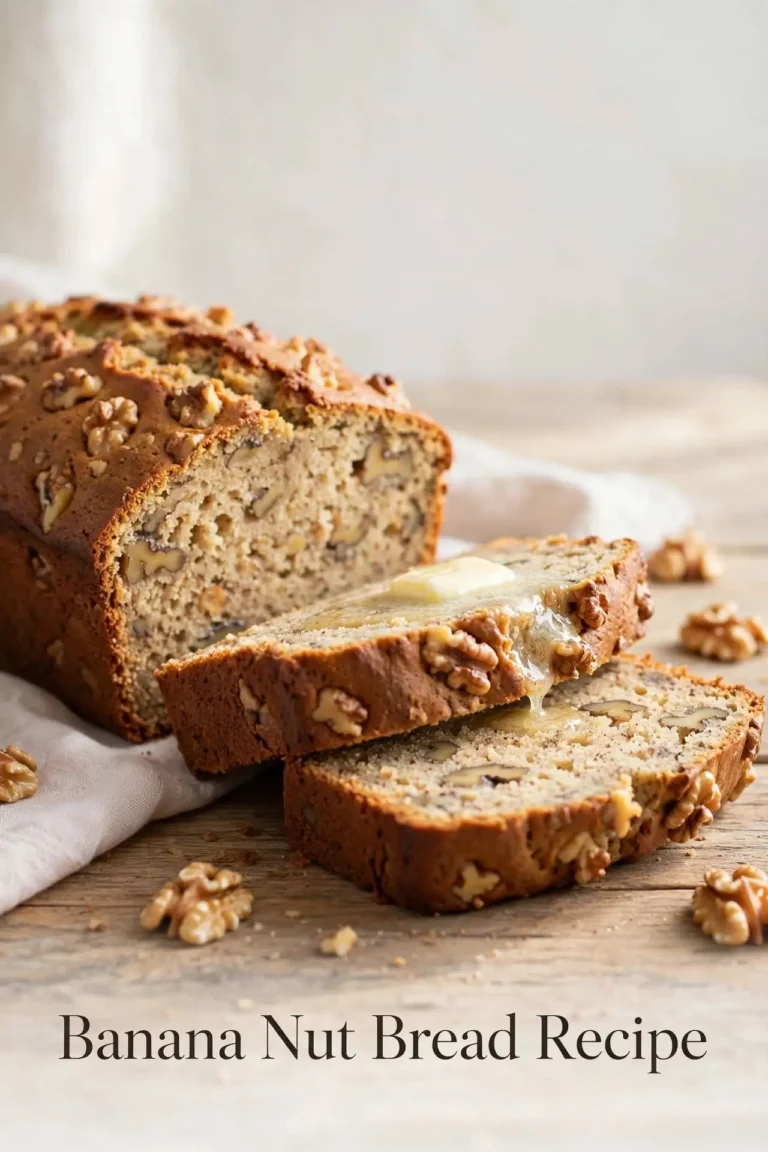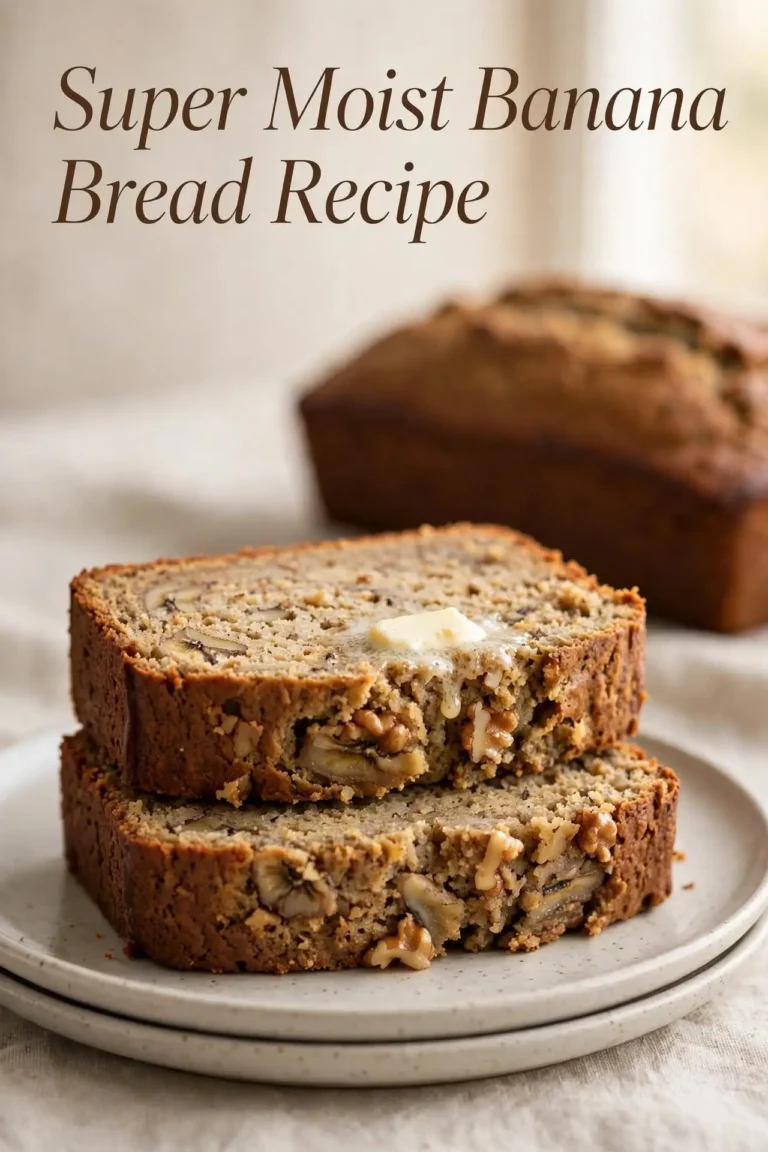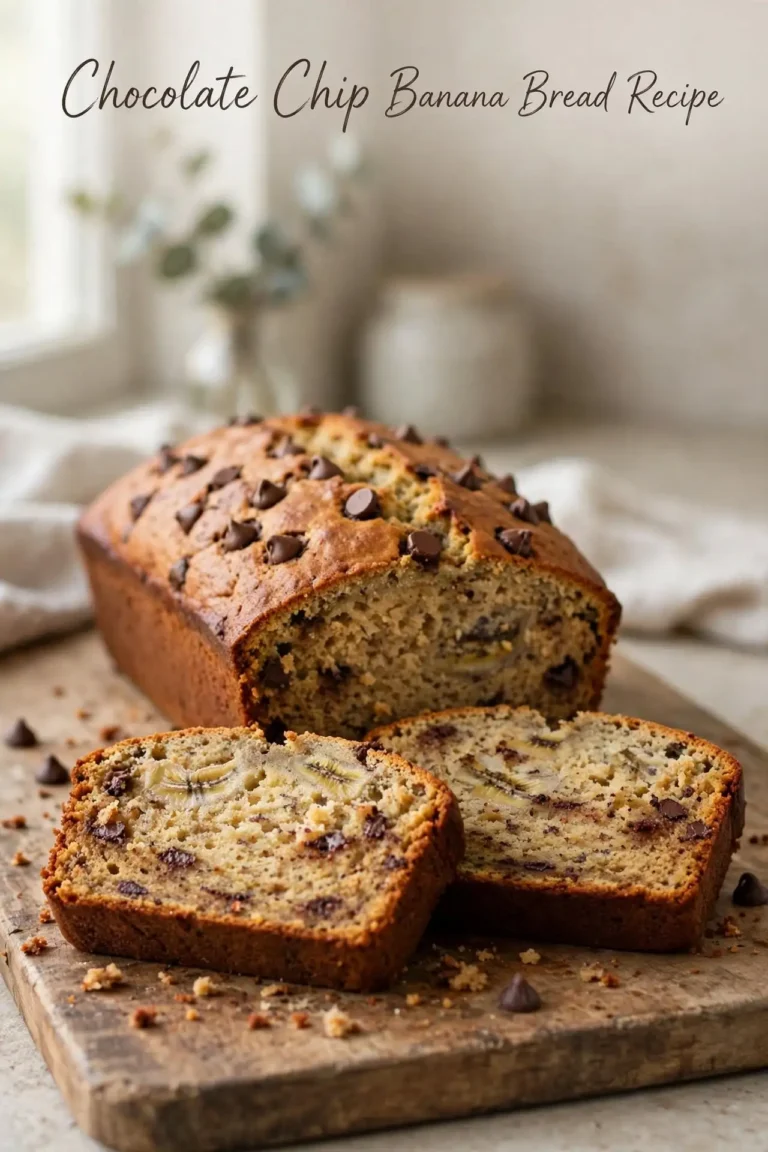
Gluten Free Banana Bread
Most people who’ve tried gluten-free baking have a story. The loaf that looked perfect and tasted like sweet sand. The cake that sank in the middle and never recovered. The banana bread that turned out so dense you could have used it as a doorstop.
It isn’t your fault, and it isn’t the bananas’ fault either. Gluten is the protein that gives regular flour its stretch and structure, and when it’s gone, the batter has to be coaxed into doing the same job in other ways. A little patience, a good flour blend and a couple of small tricks are all it takes.
This loaf is the result of getting those details right. It’s soft, deeply banana-flavored and moist enough to stay tender for days. The top turns golden and slightly crackly, the inside stays plush, and nobody at the table will guess it’s gluten-free unless you tell them. It’s also a one-bowl recipe, so the hardest part is waiting for it to cool.
Why You’ll Love This Recipe
- It’s genuinely moist. Ripe bananas, yogurt and a short rest for the batter keep the crumb soft instead of dry.
- No special flours to hunt down. A regular 1:1 gluten-free baking blend does the job.
- One bowl, no mixer. A whisk and a spatula are enough.
- It tastes even better the next day. The flavors settle and the crumb gets more tender.
- Easy to customize. Add walnuts, chocolate chips or a swirl of peanut butter.
- Freezer friendly. Slice it, wrap it and you have breakfast ready for weeks.
Why Gluten Free Banana Bread Can Go Wrong
A quick look at what’s going on explains most of the common problems.
| What can go wrong | Why it happens | The fix |
|---|---|---|
| Dry, crumbly loaf | Gluten-free flours absorb more liquid than wheat flour | Use plenty of ripe banana, yogurt and don’t overbake |
| Gummy center | Cut too early, or underbaked | Bake until done in the center and cool completely |
| Gritty texture | Flour hasn’t fully hydrated | Let the batter rest for 10 minutes before baking |
| Sunken middle | Opened the oven early or too much leavening | Keep the oven closed and measure carefully |
| Flat, dense loaf | Too much banana or the wrong flour blend | Use the amounts below and a blend made for 1:1 swaps |
| Pale and bland | Underripe bananas | Use bananas with brown or black peels |
Which Gluten Free Flour Works Best?
Not all gluten-free flours behave the same, and the one you pick changes the loaf more than any other ingredient.
| Flour option | How it behaves | Verdict |
|---|---|---|
| 1:1 gluten-free baking blend (with xanthan gum) | Closest to regular flour, easy to use | Best choice |
| 1:1 blend without xanthan gum | Works, but may need extra binder | Add ½ teaspoon xanthan gum |
| All-purpose gluten-free flour mix (made for general use) | Similar, results vary by brand | Good, check the label |
| Almond flour alone | Very moist, dense and rich | Not a direct swap |
| Oat flour (certified gluten-free) | Soft and slightly sweet | Use as a partial swap |
| Single flours (rice, tapioca, sorghum) | Need to be combined for good texture | Not recommended alone |
For the most reliable result, choose a gluten-free flour blend labeled as a 1:1 or measure-for-measure replacement. Brands differ in weight per cup, so it’s worth weighing the flour if you can.
Gluten Free Banana Bread Recipe Card
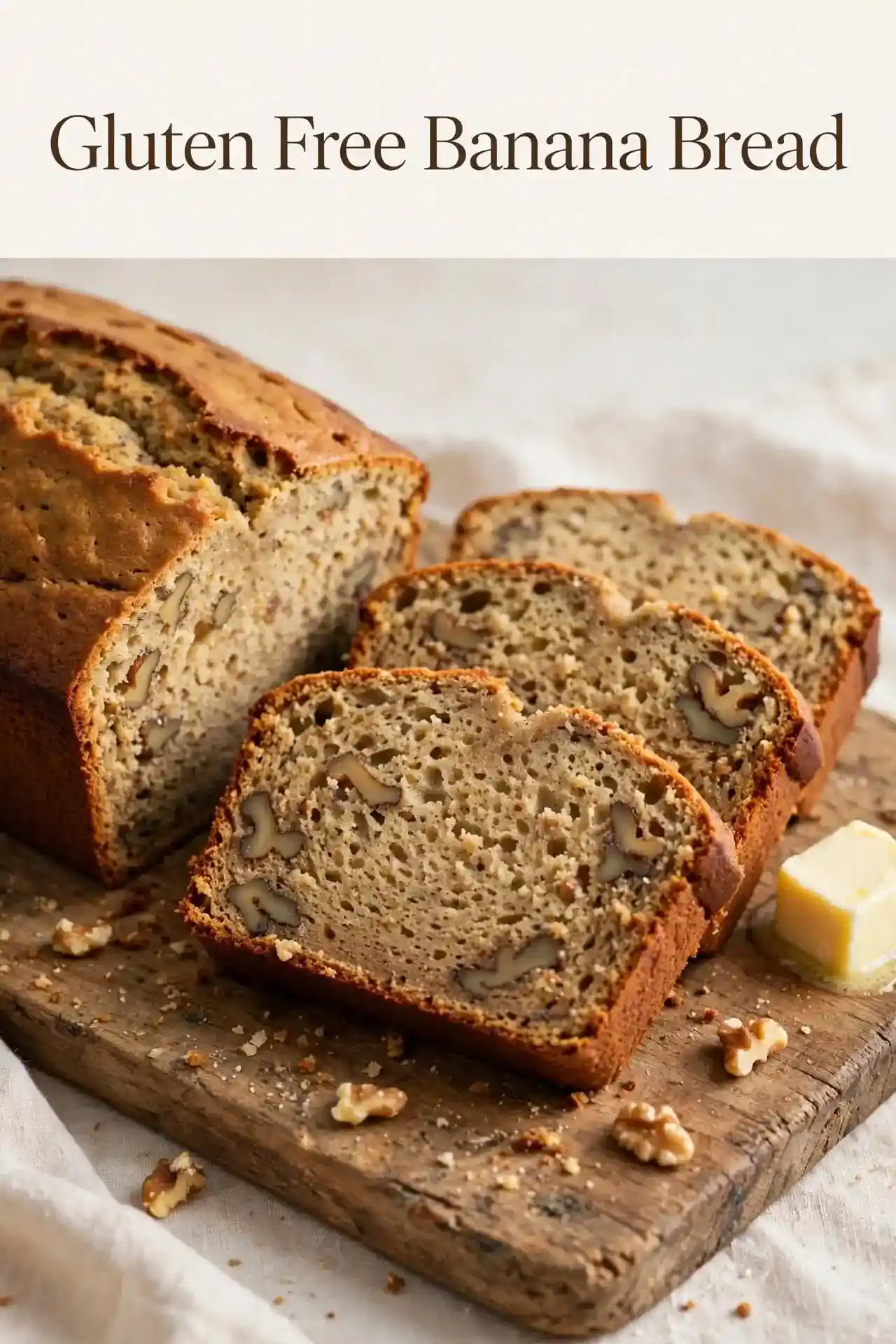
Gluten Free Banana Bread
Ingredients
Equipment
Method
- Heat the oven to 350°F (175°C). Grease a 9×5-inch loaf pan and line it with parchment paper, leaving an overhang on the long sides.
- In a large bowl, mash the bananas with a fork until mostly smooth.
- Whisk in the melted butter and brown sugar until combined.
- Add the eggs, yogurt and vanilla and whisk until smooth and glossy.
- Sprinkle the gluten-free flour, baking soda, salt and cinnamon over the wet ingredients. Fold with a spatula until just combined and no dry flour remains.
- Fold in the walnuts or chocolate chips, if using.
- Let the batter rest in the bowl for 10 minutes.
- Pour the batter into the prepared pan and smooth the top. Scatter extra nuts and coarse sugar over the top, if you like.
- Bake for 55 to 65 minutes, until the top is deep golden and a toothpick inserted in the center comes out with a few moist crumbs. If the top browns too fast, loosely tent with foil after 40 minutes.
- Cool in the pan for 20 minutes, then lift out and cool on a wire rack for at least 40 minutes before slicing.
Notes
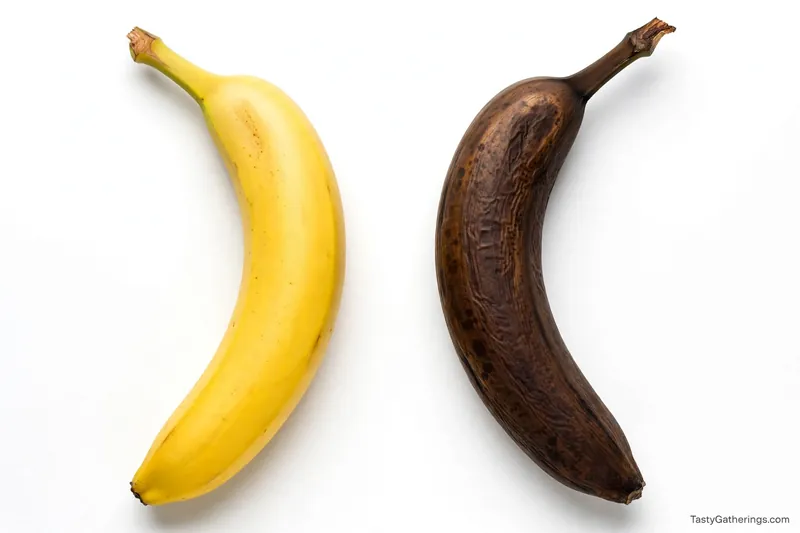
- Use very ripe bananas with brown or black skin for the best flavor and moisture.
- Choose a 1:1 gluten-free baking blend. If it doesn’t contain xanthan gum, add ½ teaspoon.
- Weigh the flour if possible, since brands vary in weight per cup.
- Resting the batter for 10 minutes prevents a gritty texture.
- The loaf is done at about 205°F (96°C) in the center.
- Cool completely before slicing to avoid a gummy center.
- Store wrapped at room temperature for 2 days, in the fridge for up to 5 days, or freeze for up to 3 months.
- For celiac disease or gluten sensitivity, use certified gluten-free ingredients and avoid cross-contact.
- Contains egg and milk, and tree nuts if walnuts are used.
How to Make Gluten Free Banana Bread, Step by Step
If you’re new to gluten-free baking, this walkthrough shows what to look for at each stage.
Step 1: Choose your bananas. Pick the spottiest, softest bananas you have. If they’re still yellow, you can ripen them in the oven. Place unpeeled bananas on a baking sheet and bake at 300°F (150°C) for 15 to 20 minutes, until the skins turn dark and glossy.
Step 2: Mash them well. Use a fork and press until the bananas are mostly smooth, with a few small lumps left. Measure about 1½ cups.
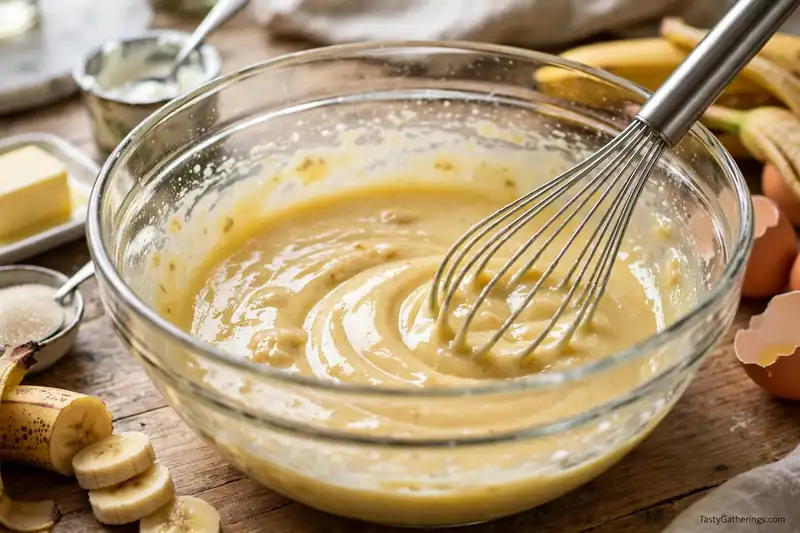
Step 3: Build the wet base. Whisk the butter, sugar, eggs, yogurt and vanilla into the bananas. The mixture should look glossy and well blended.
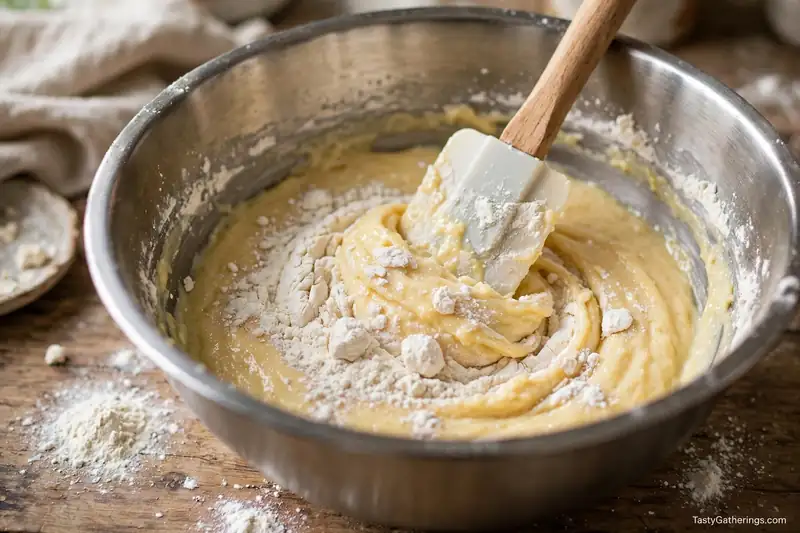
Step 4: Add the dry ingredients gently. Sprinkle the flour blend, baking soda, salt and cinnamon on top and fold just until you can’t see dry flour. Overmixing isn’t as big a risk as with regular flour, but gentle folding still gives a tender crumb.
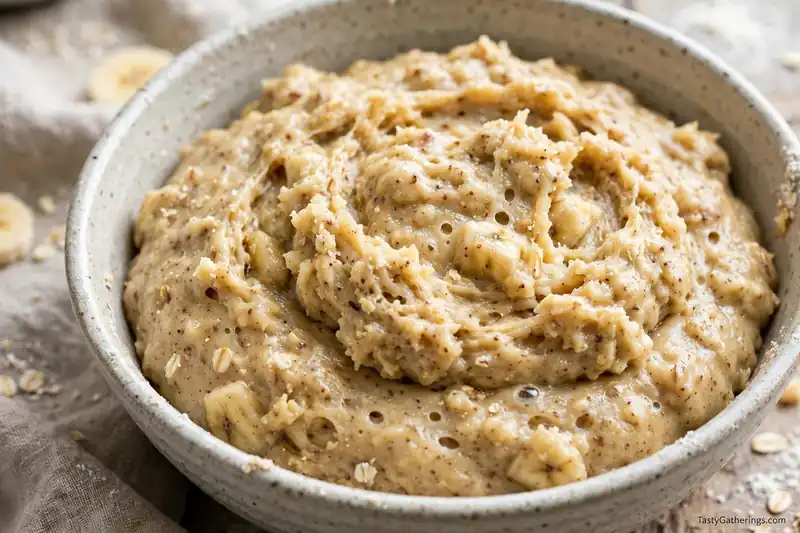
Step 5: Rest the batter. Set the bowl aside for 10 minutes. This small pause gives gluten-free flour time to absorb liquid, which prevents a gritty texture.

Step 6: Fill the pan. Pour the batter into the lined pan and smooth the top with a spatula. Add nuts or chocolate chips on top for a bakery look.

Step 7: Bake until set. Look for a deep golden top and a toothpick with a few moist crumbs. If you have a thermometer, the center should read around 205°F (96°C).

Step 8: Cool completely. Let the loaf rest in the pan for 20 minutes, lift it out and cool on a rack for another 40 minutes. Patience pays off here.
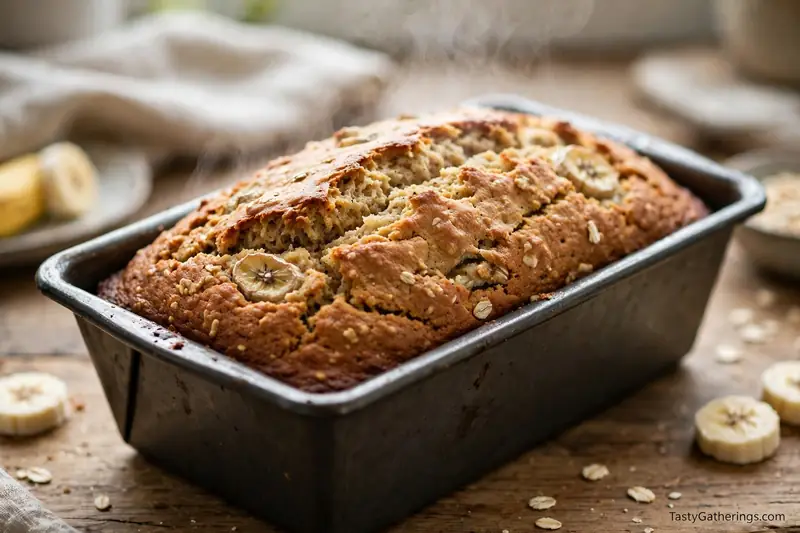
Step 9: Slice and serve. Use a serrated knife and a gentle sawing motion. Serve plain, with butter or toasted.

Pro Tips for Better Gluten-Free Banana Bread
- Rest the batter. Ten minutes makes a noticeable difference in texture.
- Weigh the flour. Brands vary widely in weight per cup.
- Use the ripest bananas you can find. They bring sweetness and moisture.
- Don’t overbake. Gluten-free loaves dry out quickly once past done.
- Tent with foil. If the top darkens before the middle sets, cover it loosely.
- Cool completely before slicing. It’s the secret to a clean, tender crumb.
- Use room temperature eggs and yogurt. They blend more evenly.
- Check your leavening. Old baking soda leads to a flat loaf.
- Store it wrapped. Gluten-free breads stale faster, so wrap once cool.
- Toast leftover slices. A quick toast with butter brings back freshness.
Pan Size and Bake Time Guide
| Pan | Approx. bake time | Notes |
|---|---|---|
| 9×5-inch loaf pan (recommended) | 55 to 65 minutes | Classic, even rise |
| 8½x4½-inch loaf pan | 60 to 70 minutes | Taller loaf, check the center |
| Two mini loaf pans | 35 to 45 minutes | Great for gifts |
| 12-cup muffin tin | 20 to 25 minutes | Fill cups about ¾ full |
| 9×9-inch square pan | 30 to 40 minutes | Cut into squares |
Start checking early, since ovens differ and gluten-free baked goods dry out quickly.
Nutrition Overview
These numbers are a rough estimate for one slice made with walnuts (the loaf is cut into 10). They change with the flour blend, add-ins and slice size, so treat them as a guide rather than a label.
| Per slice (approx.) | Amount |
|---|---|
| Calories | 300 |
| Carbohydrates | 39 g |
| Protein | 5 g |
| Fat | 14 g |
| Saturated fat | 6 g |
| Sugar | 22 g |
| Fiber | 2 g |
| Sodium | 250 mg |
How the add-ins change things
| Add-in | Roughly adds per slice |
|---|---|
| Chocolate chips (½ cup in the loaf) | 50 calories, 3 g sugar |
| Extra walnuts (¼ cup in the loaf) | 35 calories, 3 g fat |
| No nuts at all | About 30 calories less |
| Cream cheese frosting | 80 to 120 calories |
Allergens: this recipe contains eggs, milk and (optionally) tree nuts. It’s free of wheat ingredients, but always check labels for cross-contact if you need to avoid gluten strictly.
Recipe Variations
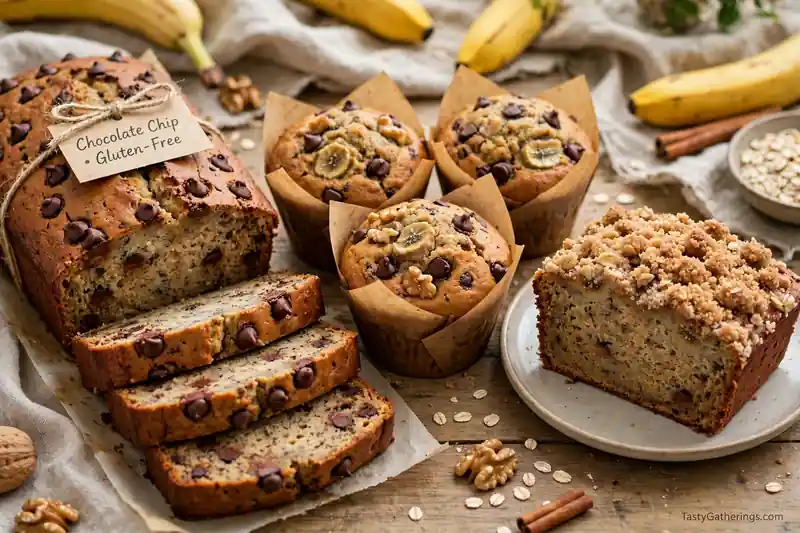
- Chocolate chip. Use ¾ cup of gluten-free chocolate chips in place of nuts.
- Peanut butter swirl. Dollop 2 tablespoons of peanut butter over the batter and swirl with a knife.
- Brown butter. Brown the butter and cool it until warm for a toffee-like flavor.
- Oat banana bread. Replace ¼ cup of the flour with certified gluten-free oat flour.
- Dairy-free. Use melted coconut oil or vegan butter and a plant-based yogurt.
- Egg-free attempt. Use flax eggs (1 tablespoon ground flax plus 3 tablespoons water per egg). The loaf will be denser.
- Less sweet. Reduce the brown sugar to ½ cup and add an extra tablespoon of yogurt.
- Banana bread muffins. Bake in a lined muffin tin for 20 to 25 minutes.
- Streusel top. Mix 2 tablespoons of gluten-free flour, 2 tablespoons of brown sugar, ½ teaspoon of cinnamon and 1 tablespoon of cold butter into crumbs and sprinkle over the batter.
- Glazed. Whisk powdered sugar with a splash of milk and drizzle over the cooled loaf.
Troubleshooting: Fixing Common Problems
| Problem | Why it happens | How to fix it |
|---|---|---|
| The loaf is dry | Overbaked or too little moisture | Bake until just done and use very ripe bananas |
| The center is gummy | Cut while warm or underbaked | Cool completely and check for about 205°F |
| The loaf sank | Oven opened early or too much leavening | Keep the door closed and measure carefully |
| The texture is gritty | Batter not rested | Let it sit for 10 minutes before baking |
| The top is dark but the middle is raw | Oven too hot or a dark pan | Lower the temperature and tent with foil |
| The loaf is dense | Too much banana or flour | Measure the flour and bananas accurately |
| The bread crumbles when sliced | Cut warm or flour blend lacks binder | Cool fully and add ½ teaspoon xanthan gum if needed |
| The flavor is flat | Bananas not ripe enough | Use brown or black bananas and a pinch of salt |
| The crust is too dark | Too much sugar on top or high heat | Reduce the topping and tent with foil |
| The loaf stuck to the pan | No parchment | Line the pan with parchment |
| The bread went stale quickly | Gluten-free loaves dry out faster | Wrap tightly, refrigerate or freeze |
Quick Facts About Gluten-Free Banana Bread
| Fact | Detail |
|---|---|
| Best flour | 1:1 gluten-free baking blend |
| Best bananas | Very ripe, with brown or black skin |
| Oven temperature | 350°F (175°C) |
| Bake time | 55 to 65 minutes |
| Doneness temperature | About 205°F (96°C) |
| Batter rest | 10 minutes |
| Yield | One 9×5-inch loaf, about 10 slices |
| Room temperature storage | 2 days, tightly wrapped |
| Fridge storage | Up to 5 days |
| Freezer storage | Up to 3 months |
| Allergens | Egg, milk, tree nuts (optional) |
| Difficulty | Easy |
How to Store, Freeze and Reheat
Room temperature. Once the loaf has cooled completely, wrap it tightly in plastic wrap or foil, or store it in an airtight container. It stays good for about 2 days, since gluten-free baked goods tend to dry out faster than regular loaves.
Fridge. For longer storage, wrap and refrigerate for up to 5 days. Warm slices briefly before eating.
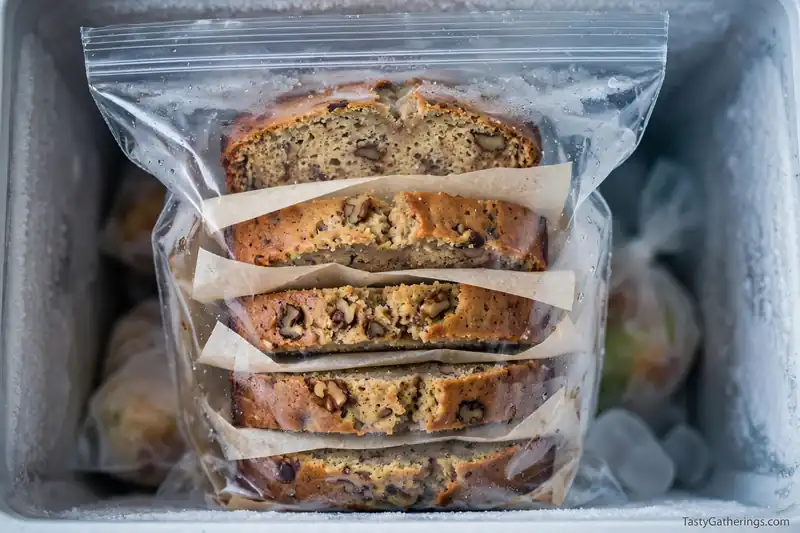
Freezing. Slice the cooled loaf, place parchment between the slices and freeze in a sealed bag for up to 3 months. Toast or microwave straight from the freezer.
Reheating. Microwave a slice for 15 to 20 seconds, or toast it in a toaster oven for a crisp edge and soft center.
What to Serve With Banana Bread
- A spread of butter or almond butter
- A cup of coffee, tea or warm milk
- A dollop of Greek yogurt and fresh berries
- A drizzle of honey or maple syrup
- A scoop of vanilla ice cream for a warm dessert
FAQs
A 1:1 gluten-free baking blend made for cup-for-cup replacement gives the most reliable result.
Usually overbaking, too little banana or a flour blend that absorbs a lot of moisture. Use very ripe bananas and pull the loaf when a toothpick shows a few moist crumbs.
Most 1:1 blends already contain it. If yours doesn’t, add ½ teaspoon.
Gluten-free flours absorb liquid more slowly, and resting prevents a gritty texture.
You can use some in a blend, but almond flour alone is much denser and needs a different recipe.
Yes. Use oil or vegan butter and a plant-based yogurt.
It’s possible with flax eggs, but the loaf will be denser, since eggs provide structure in gluten-free baking.
Final Thoughts
Gluten-free baking doesn’t have to feel like a compromise. With ripe bananas, a good flour blend and a little patience, you can make a loaf that’s soft, flavorful and good enough to bring to any table. Make it once, keep notes on what you’d change and soon this will be the loaf people ask you to bring again.
If you try it, I’d love to hear how it turned out. Leave a comment below and tell me which add-in you chose.